How NYC could comply with the Class Size Law more effectively, affordably and equitably
Comments on the IBO report on costs of compliance
For immediate release: December 16, 2025
For more information: Leonie Haimson, leonie@classsizematters.org; 917-435-9329
The IBO’s latest report includes cost estimates for staffing to meet the class size caps in the law, based upon figures two years old. However, the report also points out that accounting for current budgeted teachers, an additional 6,900 teachers should be hired by Fiscal Year 2028. By using their own figures of the cost per teacher, these 6,900 additional teachers would cost from $635 million to $720 million.
Yet the estimates in the IBO report are based upon assuming no change in enrollment in any school. If our new mayor adopted the recommendations of the Class Size Working Group report released two years ago, and directed the DOE to align their enrollment policies with the class size goals in the law, the cost for both staffing and space would be much reduced.
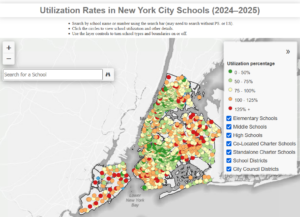
Last year, the DOE estimated that there were 495 schools without the space to meet the caps; these schools enrolled nearly half of all students, including more than a quarter million students in poverty.
There are many underenrolled schools sitting close by overcrowded schools that could benefit from more students, to be able to offer more programming and services. Balancing enrollment between schools would not only provide more equity and would benefit students at both types of schools but could also save more than a billion dollars for staffing and space.
Finally, the IBO has interpreted the class size law as requiring funding to be apportioned to schools based primarily upon their percentage of high-poverty students, regardless of how many high-poverty students they enroll. This is an interpretation that many others, including some in the media, have made. Yet the law says the following: “The class size reduction plan shall prioritize schools serving populations with higher poverty levels.”
Levels is a term that can be defined as “the amount or number of something”, according to the Cambridge dictionary. Thus, the law could also be interpreted to mean that class size funds should be apportioned to schools with both high numbers and rates of students in poverty.
The New York State Education Department provides a list of schools each year according to their weighted need, based on their number and percent of enrolled high-poverty students, to indicate how districts should allocate Contracts for Excellence funds, which are being used in NYC for class size reduction as well as other programs. When NYC schools are divided into quartiles based upon NYSED’s weighted need list, it becomes clear that those with the highest weighted need are those that have the fewest classes in compliance with the smaller class size goals this year.
Fewer than half of the classes in the highest weighted need quartile met these goals this fall, compared to 73.6% of the classes in the lowest weighted need quartile. A chart showing this as well as more explanation of these findings are on our website here.
To bring smaller classes to all students who need them, and to do it more affordably and efficiently, the DOE should align their enrollment policies with those goals, rather than continue their current policy of reducing class size only in those schools whose principals choose to apply for these funds at schools that already have the space.
Social Networks: