DOE must revise draft class size proposal by providing a concrete plan showing how smaller classes will be provided to NYC students within the legal timeline
For immediate release: August 3, 2026
Contact: Leonie Haimson, leonie@classsizematters.org; 917-435-9329
Last week, Class Size Matters and the Education Law Center sent a letter pointing out the serious deficiencies in the draft NYC Department of Education proposed class size plan, urging Chancellor Samuels revise and strengthen this proposal before it is submitted to the State Education Commissioner on August 14.
As they explained, the proposal lacks transparency and instead is replete with ambiguous and conditional language and fails to outline what policies will be used in specific schools to ensure that sufficient staffing and space will be provided to allow them to meet the benchmarks in the law. Instead, the DOE admits that they “hope to use the exemption process as part of the overall strategy to comply with the law” and the word “exemption” is used 35 times in the draft. Last school year, the DOE achieved the 60% benchmark but only by exempting 10,535 classes in 123 schools.
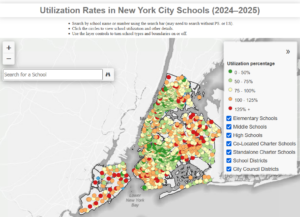
For example, there are more than 600 unnamed schools that DOE admits do not have the space at their current enrollment to lower class size to required levels. For 133 schools in communities so overcrowded that more capital construction nearby is needed, DOE officials refused to make any firm commitments that enough school seats will be built. Instead, they only say that the “SCA will work to identify viable solutions for these schools in accordance with available funding.”
The language is just as vague for ninety overcrowded schools where only small adjustments in enrollment would allow them to meet the class size caps. Rather than commit to doing so, they write that “scenarios will be developed and explored that would better align existing space to demand and enrollment.”
“ Without building enough new schools in overcrowded neighborhoods and aligning their enrollment policies with the goals in the law, it is extremely unlikely that hundreds of thousands of NYC students, many of them disadvantaged, will ever be able to benefit from the smaller classes they need and deserve. Already we’ve heard from parents at schools where class sizes are projected to sharply increase in the fall, and compliance levels fall due to enrollment increases, with no extra funding to hire more teachers.” said Leonie Haimson, Executive Director of Class Size Matters.
Layla Law-Gisiko, President of the City Club pointed out, “The City’s success in creating much-needed housing across neighborhoods is welcome and essential. But housing growth must be matched by equally ambitious, comprehensive planning for schools and other public infrastructure. The Mayor’s Office, the Department of Education, and the School Construction Authority should coordinate from the outset so that new schools are incorporated into development plans, rather than added years later, or not at all.
As Layla pointed out, “Rather than adopt any of the realistic, practical proposals of the Class Size Working Group in their December 2023 report to expand school space and utilize existing space more quickly and affordably, instead this draft proposes to work with the Legislature to ‘carve out public school construction projects from environmental review.’ We have seen a similar troubling provision in the state budget passed last spring. The answer to providing NYC students with smaller classes is not to expose them to environmental harm or to allow schools to be built in areas prone to flooding due to climate change, which such a change in policy might encourage.”
“Data shows that the largest number of Black and Hispanic students, as well as students with IEPs and those in poverty are enrolled in schools with the lowest rates of class size compliance. We urge the NYC DOE to revisit its current class size plan to ensure that it complies with the law and eliminate this overcrowding before submitting the proposal to the State for approval,” concluded Wendy Lecker, Senior Attorney at the Education Law Center.
###
Social Networks: