PEP Resolution: Comprehensive Multi-Year Strategic Plan to Lower Class Size and Mitigate School Overcrowding
PEP Resolution: Comprehensive Multi-Year Strategic Plan to Lower Class Size and Mitigate School Overcrowding (passed March 18, 2026)
WHEREAS, New York City Public Schools face persistent overcrowding and must adhere to statutory class size mandates within the next two years; and
WHEREAS, Reducing class size has proven to be through research to be one of the best ways to improve student learning, lower teacher attrition rates, and narrow achievement and opportunity gaps between students of different racial, gender, and economic groups;
WHEREAS, smaller classes have been also shown to build trust between students and teachers, and lead to stronger student engagement, fewer disciplinary referrals, and higher graduation and college-going rates, especially for those students who need help the most;
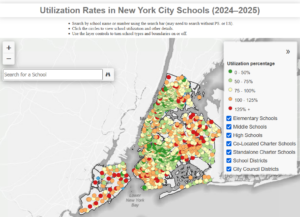
WHEREAS, according to NYCPS there are nearly 500 schools without the space to meet the mandates in their class size law at their current enrollment;
WHEREAS in March 2025, the School Construction Authority testified to the City Council that 70,000 more school seats would be needed to comply with the law, though only 33,417 are currently funded in the five-year capital plan for 2025-2029;
WHEREAS resolving these space deficits requires a coordinated strategy among the School Construction Authority (SCA), the Division of Finance, the Office of Student Enrollment, and the Office of District Planning; now, therefore, be it
RESOLVED, That NYCPS shall design and execute a multi-year master plan to expand capacity for overcrowded schools by integrating the collective resources of the SCA, Finance, Enrollment, and District Planning; and be it further
RESOLVED, That this plan shall mandate:
- Capacity & Funding: A time-bound strategy to accelerate the construction of new schools and annexes specifically targeting regions unable to meet class size caps.
- Enrollment Balancing: A framework to rebalance enrollment between neighboring facilities to optimize resources at both overcrowded and underutilized schools, which would benefit both types of schools.
- Policy Innovation: Integration of Class Size Working Group proposals, including “anchor-tenancy” in new housing developments, the revival of the Educational Construction Fund, and a reconstituted School Siting Task Force with robust community oversight.
- Utilization Priorities: Directives for District Planning to prioritize building usage that aligns with legal class-size benchmarks.
- Accountability: A requirement that all Educational Impact Statements (EIS) and Building Utilization Plans (BUP) explicitly analyze the impact on achieving smaller class sizes.
RESOLVED, That copies of this resolution be transmitted to the Chancellor and relevant City officials for immediate implementation.
RESOLVED, That the Chancellor and the President of the School Construction Authority will report to the Panel as soon as is practicable on what their strategy will be going forward to comply with the Class Size Law.
Social Networks: